
China warehousing services can help importers store goods, consolidate orders from multiple suppliers, inspect and relabel products, prepare cargo for export, and coordinate international transportation from one location.
Quick Answer: A China warehouse is useful when you source from multiple suppliers, need temporary storage before export, want to consolidate several orders into one shipment, or require services such as inspection, labeling, packing, palletizing, inventory handling, and freight coordination.
What Is a China Warehouse Service?
A China warehouse service provides storage and cargo-handling support before goods are exported, distributed, or transferred to another location. Depending on the provider, services can include receiving cargo from suppliers, inventory recording, consolidation, inspection, repacking, labeling, palletizing, order preparation, and coordination with freight carriers.
For international importers, warehousing in China can create a central point between suppliers and the final international shipment.
Common China Warehousing Services
- Short-term and longer-term cargo storage
- Supplier pickup and warehouse receiving
- Multi-supplier consolidation
- Cargo inspection and quantity checks
- Labeling and relabeling
- Repacking and export packing
- Palletizing
- Inventory recording and stock handling
- Order sorting and preparation
- Coordination with air, sea, rail, and express freight
When Should You Use a Warehouse in China?
A China warehouse can be particularly useful when several suppliers finish production at different times or when goods need additional handling before export.
Typical situations include:
- You purchase products from multiple Chinese suppliers.
- You want to combine several orders into one international shipment.
- Your suppliers cannot all deliver cargo at the same time.
- You need inspection, labeling, repacking, or palletizing before export.
- You need temporary storage while waiting for a sailing, flight, or other transport arrangement.
- You want one logistics provider to coordinate storage and international freight.
Supplier Consolidation in China
Supplier consolidation is one of the most common reasons importers use warehousing services in China.
Instead of asking every supplier to ship internationally on its own, the suppliers can send their goods to one warehouse. The warehouse can receive the cargo, record each shipment, combine the goods, and prepare them for a single export movement when appropriate.
Whether consolidation saves money depends on the shipment size, number of suppliers, handling requirements, transport mode, and destination charges. It should be evaluated based on the complete logistics cost rather than only the international freight rate.
Types of Warehouses in China
Public or Shared Warehouses
Shared warehouses provide storage and handling space to multiple customers. They can be suitable for importers that need flexible storage without operating their own facility.
Private Warehouses
A private warehouse is operated or leased for the use of one company. This model can provide greater control but usually requires significantly more inventory volume and operational resources.
Bonded Warehouses
Bonded warehouses operate under specific customs supervision and can be useful for certain import, export, processing, or re-export arrangements. Whether a bonded warehouse is appropriate depends on the cargo flow and applicable customs requirements.
Where Should You Warehouse Goods in China?
The right warehouse location usually depends on where your suppliers are located and which export gateway you intend to use.
Major manufacturing and logistics regions such as Shenzhen, Guangzhou, Dongguan, Shanghai, Ningbo, Yiwu, Qingdao, and other export centers can all be suitable depending on the supply chain.
For example, importers sourcing primarily from the Pearl River Delta may prefer a warehouse in or around Shenzhen or Guangzhou. If your suppliers are concentrated in eastern China, a warehouse closer to Shanghai, Ningbo, Yiwu, or nearby manufacturing areas may reduce domestic transportation requirements.
If you specifically need warehousing in Shenzhen, see our Shenzhen Warehouse Guide.
How to Choose a China Warehouse
Before choosing a warehouse provider, confirm the services, handling procedures, location, and charges that apply to your actual cargo.
- Location: Compare the warehouse with supplier locations and the planned export port or airport.
- Storage capability: Confirm available space and whether the warehouse can handle the size and type of your cargo.
- Receiving process: Ask how supplier deliveries are recorded and checked.
- Value-added services: Confirm inspection, labeling, repacking, palletizing, photography, or other required work.
- Inventory management: Ask how stock movements and remaining inventory are recorded.
- Freight coordination: Confirm whether the warehouse can hand cargo over to your forwarder or coordinate international shipping.
- Pricing: Request a breakdown of storage, receiving, handling, picking, packing, inspection, and outbound fees.
China Warehouse Costs
There is no reliable single storage rate that applies to every China warehouse. Pricing varies by city, warehouse type, storage duration, cargo volume, weight, pallet requirements, receiving frequency, and additional handling services.
A warehouse quotation may include several separate charges, such as receiving, storage, pallet handling, picking, packing, inspection, labeling, consolidation, loading, and domestic transportation.
For this reason, request a current quotation using the actual cargo information rather than relying on fixed historical warehouse rates.
China Warehousing and International Freight
Warehousing and freight forwarding often work together. Once cargo from different suppliers has been received and prepared, it can be transferred into an international air, sea, rail, or express shipment.
The appropriate transport mode depends on cargo dimensions, weight, commodity, destination, urgency, and budget. For ocean freight, the shipment may move as LCL or FCL depending on volume. Smaller or urgent cargo may be better suited to air freight or express service.
China Warehouse FAQs
Can a China warehouse receive goods from multiple suppliers?
Yes. Multi-supplier receiving and consolidation are common warehouse services. Each supplier can send cargo to the same warehouse, where the shipments can be recorded and prepared for later consolidation.
Can a warehouse inspect my goods?
Many warehouse and logistics providers offer basic quantity checks, photography, packaging checks, labeling, or other inspection-related services. The exact inspection scope should be agreed before the goods arrive.
How long can goods stay in a China warehouse?
Storage periods depend on the warehouse provider, available capacity, cargo type, and service agreement. Confirm the permitted storage period and the pricing structure before sending cargo.
How much does warehousing in China cost?
Costs vary by location, storage volume, duration, receiving and handling frequency, and additional services. A shipment-specific quotation is more useful than a fixed generic rate.
Can a China warehouse arrange international shipping?
Many logistics warehouses work together with freight forwarding services or are operated by freight forwarders. They may be able to coordinate cargo consolidation and international transportation after warehouse handling is complete.
China Warehousing Services from JIKE Logistics
JIKE Logistics can coordinate warehousing and freight services for cargo sourced in China, including supplier receiving, consolidation, storage, cargo preparation, and international transportation according to the shipment requirements.
To request a warehouse quotation, provide your supplier locations, cargo description, package count, dimensions, weight, expected storage period, required warehouse services, and final destination.



Related Articles
View all articles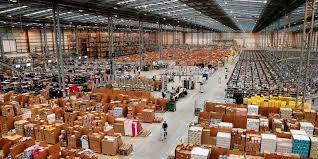
Shenzhen Warehouse Services | Storage, Consolidation & Export Prep
Guide to Shenzhen warehouse services for importers, including storage, supplier pickup, consolidation, inspection, labeling, packing, inventory handling, and export preparation.
02 May 2024

Freight Forwarder Insurance Explained: Protecting Your Cargo
Learn about freight forwarder insurance that protects your goods in every way. Explore coverage options to ensure worry-free delivery during transportation.
11 April 2024
Decoding Live Unload Meaning | Ultimate FAQ Guide
Explore the logistics world with our guide on Live Unload Meaning. Discover the significance of live unloading in shipping and streamline your supply chain effortlessly.
11 April 2024
Consult Our Experts
Start with your email and a short message.
Go to inquiry form